President Yoweri Kaguta Museveni has assured traders affected by the recent floods in Kampala that government compensation for losses incurred is a settled matter, underscoring the state’s responsibility to protect livelihoods disrupted by public infrastructure failures and extreme weather events.
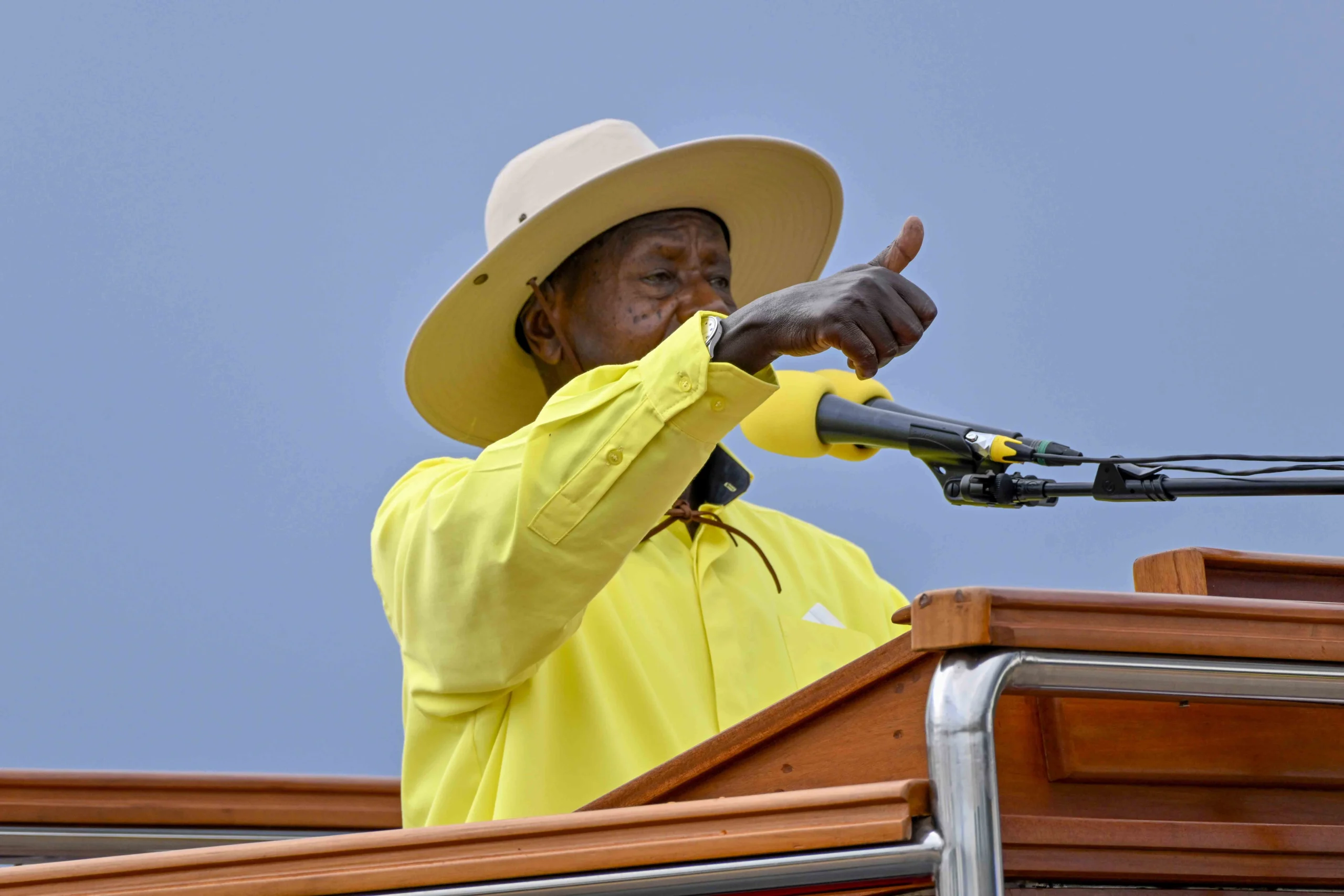
“We are going to go through that report. We have to compensate you because you made losses. There are no arguments about that,” the President said, addressing leaders of the trading community at his Kisozi Farm.
The engagement brought together leaders of the Federation of Uganda Traders Association (FUTA), led by its president, Mr. John Kabanda, at a time when Kampala’s commercial ecosystem is still reeling from successive flood incidents that exposed long-standing vulnerabilities in the city’s drainage infrastructure.
Floods, Infrastructure Pressure and Urban Risk
Kampala was hit by severe flooding following heavy rains on October 31, with the situation worsening less than three weeks later after another downpour around November 19–20. Low-lying commercial zones such as the Container Village and the Queensway interchange were particularly affected, leading to widespread destruction of merchandise and business premises.
Traders estimate losses running into billions of shillings. In their engagement with government, they attributed the scale of flooding to ongoing construction works along the Nakivubo Channel, which they say narrowed critical drainage corridors and amplified the impact of heavy rainfall. The episode has reignited broader questions around urban planning, infrastructure sequencing, and climate resilience in Uganda’s rapidly growing capital.
State Response and Compensation Commitment
President Museveni’s remarks signal a clear political commitment to resolve the matter administratively rather than through protracted legal processes. Traders welcomed this approach, noting that government officials, including the Minister for Kampala and Metropolitan Affairs and the Prime Minister, visited the affected areas shortly after the floods.
Mr. Aman Kavuma, one of the affected traders, recalled the President’s earlier directive that victims be identified and their concerns addressed promptly. He said traders were awaiting guidance on the next steps, expressing confidence in the government’s structures. Ms. Allen Kisakye, another trader, testified that the floods had wiped out all her property, highlighting the urgency of compensation for business continuity and household survival.
Tax Policy, Gen Z and the Domestic Economy
Beyond flood compensation, the President used the meeting to clarify government tax policy, particularly in response to concerns raised by young entrepreneurs, commonly referred to as Gen Z. He stressed that Uganda’s taxation framework is deliberately structured to protect local trade while discouraging excessive dependence on imports.
“Our taxes are intentional, not accidental,” President Museveni said, explaining that taxation largely targets imported and luxury goods rather than locally traded essentials. He noted that small-scale traders dealing in local produce face minimal tax burdens beyond basic market dues.
The President reiterated that import substitution remains a central pillar of Uganda’s economic strategy, urging traders to focus on internal distribution and local production. According to him, a stronger domestic production base will naturally reduce imports over time, broaden the tax base sustainably, and strengthen national economic sovereignty.
Dialogue, Stability and Political Undertones
Ms. Kellen Kiconco, the Presidential Advisor on Tax Matters, praised Kampala traders for opting for dialogue over confrontation at a moment when tensions could easily have escalated. She described traders as critical partners in revenue mobilization and national stability, noting that their decision to formally document and submit their grievances to State House preserved public order.
She further revealed that traders had taken a collective position to support President Museveni in the forthcoming elections, citing their appreciation of the prevailing peace and the government’s willingness to engage.
Traders’ Perspective: Peace as Economic Capital
For FUTA president Mr. John Kabanda, peace and freedom of expression remain the bedrock of Uganda’s trading environment. He thanked the President for maintaining national stability despite the economic shocks faced by traders and said the business community continues to trust government institutions.
He noted that traders have already begun mobilization efforts across the country, including in Fort Portal, Mbarara, Masaka, Jinja and Mbale, with plans to intensify engagement within Kampala. According to Mr. Kabanda, even small-scale traders remain optimistic about growth prospects anchored in security and predictability.
A Broader National Lesson
The Kampala floods have become more than an isolated disaster; they are a stress test for Uganda’s urban governance, infrastructure planning and social contract with the informal and formal business community. President Museveni’s assurance of compensation, coupled with calls for stronger internal trade and production, reflects a governance approach that blends immediate relief with longer-term structural thinking.
The meeting was attended by the Minister for Kampala and Metropolitan Affairs, Hon. Minsa Kabanda, and the Commissioner General of the Uganda Revenue Authority, Mr. John Musinguzi Rujoki, underscoring the multi-institutional nature of the response.
As Uganda continues its urban and economic transformation, the Kampala floods serve as a reminder that growth, resilience and inclusion must move together—hallmarks of a truly Rising Nation.