Kampala | Kololo Ceremonial Grounds
President Yoweri Kaguta Museveni’s pledge of an Shs85 billion revolving fund for salon operators marks more than sectoral support for beauty professionals; it represents a deliberate policy signal positioning the Beauty and Personal Care Services sector within Uganda’s broader national and economic transformation agenda.
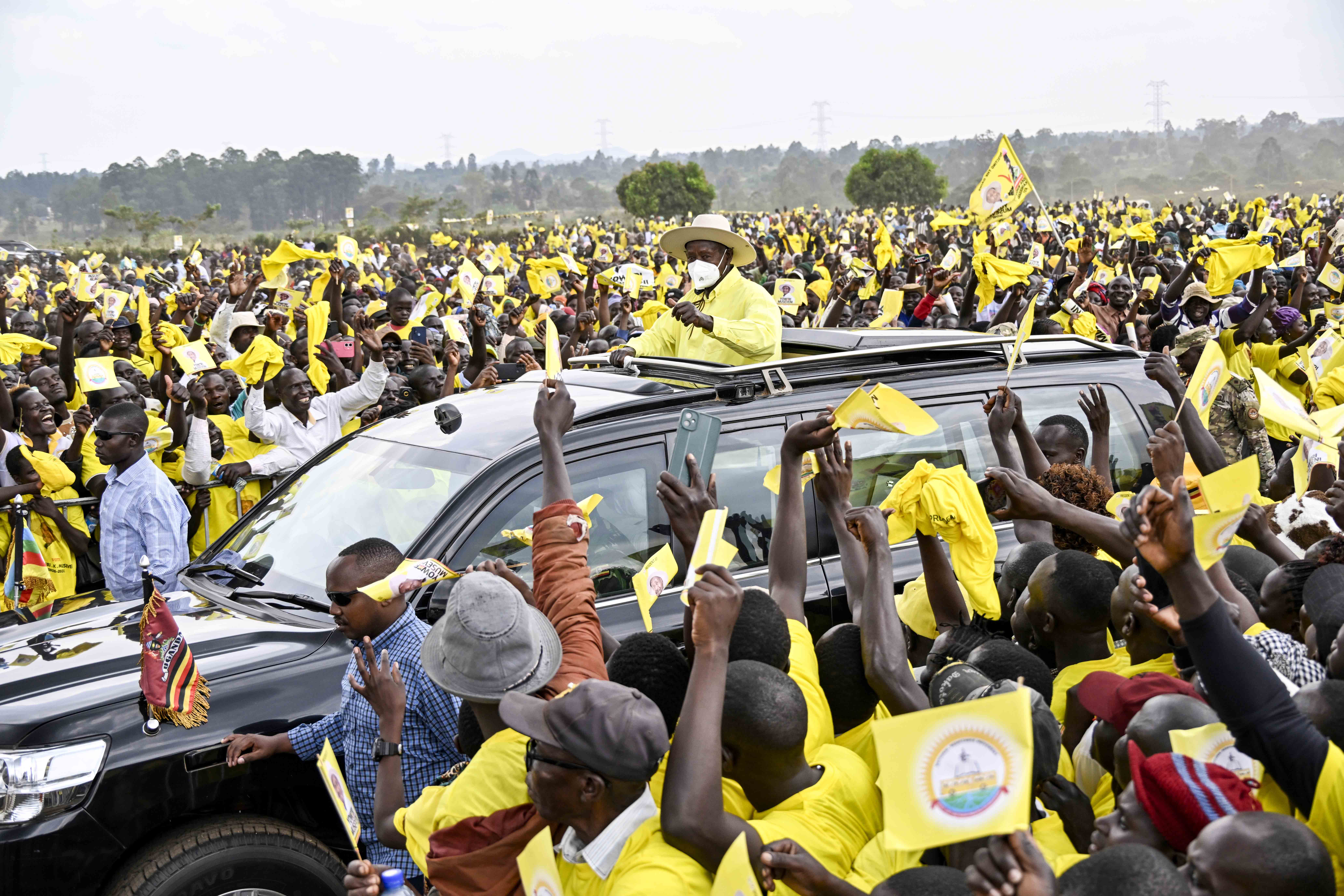
Speaking at the launch of the Federation of Uganda Salon Operators and Beauty Professionals at Kololo Ceremonial Grounds, the President underscored the strategic role of service-based enterprises in transitioning Uganda from a subsistence economy to a modern, monetised and value-driven one. He noted that as urbanisation accelerates and lifestyles evolve, personal care services have become an essential part of the urban economy, sustaining livelihoods, creating employment and supporting household incomes, particularly for women and youth.
The President framed the intervention within Uganda’s historical journey of economic and cultural renewal, recalling how colonial systems undermined African identity and self-worth, including perceptions of beauty. He observed that Uganda’s economic transformation must go hand in hand with cultural confidence and value creation, noting that the resurgence of African-defined beauty standards and locally produced beauty products reflects deeper structural change, self-reliance and endogenous growth.
Under the proposed financing model, government will channel support through a revolving fund by allocating Shs100 million annually to each SACCO, with approximately 850 SACCOs countrywide, translating into about Shs85 billion per year. President Museveni explained that this approach mirrors the logic of the Parish Development Model, which is designed to integrate informal enterprises into the money economy by enabling access to affordable capital, productive investment and disciplined repayment.
He further aligned the initiative with government’s industrialisation and import substitution objectives, welcoming the fact that salon operators are increasingly developing their own beauty products. This, he said, strengthens local manufacturing, reduces reliance on imports and opens pathways for small enterprises in the Beauty and Personal Care Services sector to evolve into structured, scalable businesses.
Acknowledging the distinct cash-flow dynamics of service-based enterprises, the President proposed a one-year loan cycle for salon operators, shorter than that of agricultural enterprises under PDM. This, he noted, reflects a pragmatic understanding of service-sector economics, where faster turnover allows quicker reinvestment, repayment and expansion.
The Deputy Speaker of Parliament, Rt. Hon. Thomas Tayebwa, situated the President’s pledge within the broader objective of inclusive growth, thanking him for consistently recognising informal-sector actors as central to national development rather than peripheral beneficiaries. He cautioned, however, that budgeted funds for sectors such as beauty and personal care must be effectively released by implementing agencies, particularly the Microfinance Support Centre, if transformation goals are to be realised.
The Minister of State for Youth and Children Affairs, Hon. Balaam Barugahara, highlighted that the Beauty and Personal Care Services sector forms part of a wider ecosystem of informal and micro-enterprises, including tailoring and artisan trades, that collectively employ millions. He noted that empowering such sectors is critical to reducing unemployment, deepening financial inclusion and accelerating poverty reduction.
Representing industry stakeholders, the Chairperson of the Federation of Uganda Salon Operators and Beauty Professionals, Mr. Kamanyire Celestine, welcomed the President’s intervention as a recognition of beauty services as a legitimate economic pillar. He called for the formal launch of all 850 SACCOs, a clear operational mandate for the federation and sustained financing of at least Shs100 million per SACCO. He also proposed the establishment of a common user facility to support skills development, innovation and shared production infrastructure.
Taken together, the Shs85 billion revolving fund places the Beauty and Personal Care Services sector firmly within Uganda’s national development architecture, linking grassroots enterprise, cultural identity, industrial policy and financial inclusion. The initiative reinforces the government’s strategy of transforming the economy by empowering service-sector entrepreneurs as active contributors to growth, resilience and long-term prosperity.